

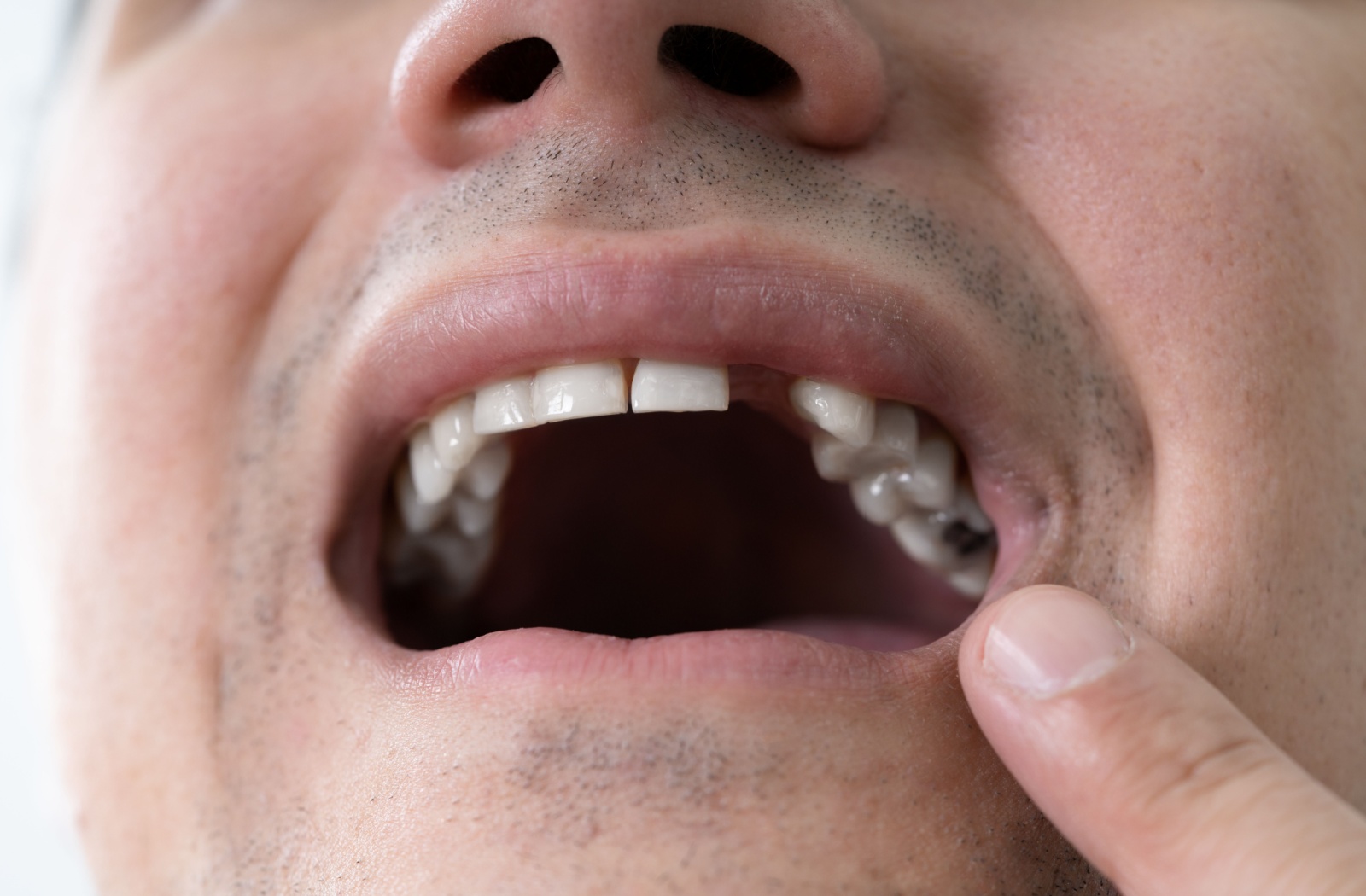
Losing a tooth can feel overwhelming. It’s natural to wonder about your next steps and how you can restore your confidence with cosmetic dental services.
Fortunately, modern dentistry provides several reliable ways to help you smile and chew with ease again. There are several effective ways to restore your smile, most commonly with dental implants, fixed bridges, or partial dentures.
A visit with a friendly dentist in SW Calgary is a great first step to understand which of the various options for replacing missing teeth is suitable for your situation.
What to Do Immediately After You Lose a Tooth
If your tooth gets knocked out, you’ll need to take action quickly. Here’s what you’ll need to do before you get emergency dental care:
- Handle the tooth by the crown—the part you chew with—not the root.
- Gently rinse the tooth with water if it’s dirty, but do not scrub it.
- If you can, try to place the tooth back in its socket and hold it there with gentle pressure.
- If you can’t re-insert it, store the tooth in a small container of milk.
- See a dentist as soon as possible for an assessment.
Your Options for a Single Missing Tooth
There are a few common ways to replace a missing tooth. Your dentist can help you decide which choice is right for your smile and your health.
Dental Implants
A dental implant acts as a replacement for your tooth’s root. It’s a small metal post that is placed into your jawbone. After the area heals, a new, natural-looking crown is attached to the post to complete your smile.
Fixed Dental Bridges
A dental bridge literally bridges the gap left by a missing tooth. It uses the teeth on either side of the gap as anchors. A false tooth is attached in the middle of two crowns, which are then placed over the neighbouring teeth to hold the false tooth securely in place.
Partial Dentures
A removable partial denture is another straightforward option, even for one missing tooth. This appliance has a replacement tooth attached to a gum-coloured base. It may also have clasps that connect to your natural teeth to keep it stable.
The General Process for Tooth Replacement
While the exact process depends on the option you choose, the first step is always a consultation with your dentist.
Your First Consultation & Exam
Your dentist will assess your mouth, check the health of your jawbone, and look at the surrounding teeth. They may also take X-rays to get a clear picture of your oral health. This is a great time to discuss your goals and ask any questions you have.

Create a Personal Treatment Plan
Based on your exam and conversation, your dentist will recommend one or more options. Together, you’ll create a treatment plan that outlines the steps and timeline involved. You’ll know what to expect throughout the entire process.
The Replacement & Restoration
This phase involves the actual procedure—whether it’s placing an implant, preparing teeth for a bridge, or taking impressions for a denture. Follow-up visits are often part of the plan.
Common Questions About Tooth Replacements
It’s normal to have questions about any dental procedure. Here are the answers to a few common concerns people have when they consider tooth replacement.
How Uncomfortable Is a Tooth Replacement?
Your dentist will take steps to help you feel comfortable during any procedure. A local anesthetic is used to numb the area, so you shouldn’t feel pain during the treatment. Some soreness afterward is normal, but this can often be managed with simple pain relievers.
What Factors Affect the Cost?
The cost to replace a missing tooth can vary based on a few key factors. For some people, programs like the Canadian Dental Care Plan may offer assistance.
A few different factors can also influence the final price:
- The type of replacement you choose, such as an implant, bridge, or denture
- The materials used for the crown or false tooth
- Whether any additional procedures, like a bone graft, are needed
How Long Will My New Tooth Last?
The durability of your tooth replacement depends on the type you choose and how well you care for it. Dental implants can last for many years with proper care. Bridges and dentures may need to be replaced over time, but good oral hygiene can extend their longevity.
How to Care for Your New Tooth & Gums
Proper care helps your new tooth replacement last as long as possible and keeps the rest of your mouth healthy. It’s not that different from caring for your natural teeth.
- Brush your teeth twice a day with a soft-bristle toothbrush.
- Floss daily, paying special attention to the area around the replacement tooth.
- Continue with regular dental check-ups and cleanings to maintain your oral health.
Taking care of a missing tooth is a positive step for your overall well-being. If you’re ready to explore your options, our team at Ti Dental is here to help. Request an appointment today and find the right solution for your smile.