



Key Takeaways
- Full mouth implant treatment uses implants placed in your jawbone to support replacement teeth, while dentures rest on your gums and come out at night.
- Once healed, implants can handle most foods and feel close to natural teeth, while dentures may limit harder snacks.
- Implants help stimulate the jawbone, while traditional dentures do not provide the same support.
- Dentures cost less upfront, while implants tend to last longer with daily care.
- Implant-supported dentures can offer added stability at a more approachable cost.
What Full Mouth Implants & Dentures Are
The main difference between full mouth implants and dentures comes down to how they sit in your mouth: implants are anchored in the jawbone to support replacement teeth, while traditional dentures rest on the gums and can be removed for cleaning.
Our team at Ti Dental can help you compare your options.
What Exactly Are Implants and Dentures?
Full mouth implant treatment uses dental implants placed in the jawbone to support replacement teeth, such as an implant-supported bridge or denture. These implants act like roots and help hold the restoration firmly in place.
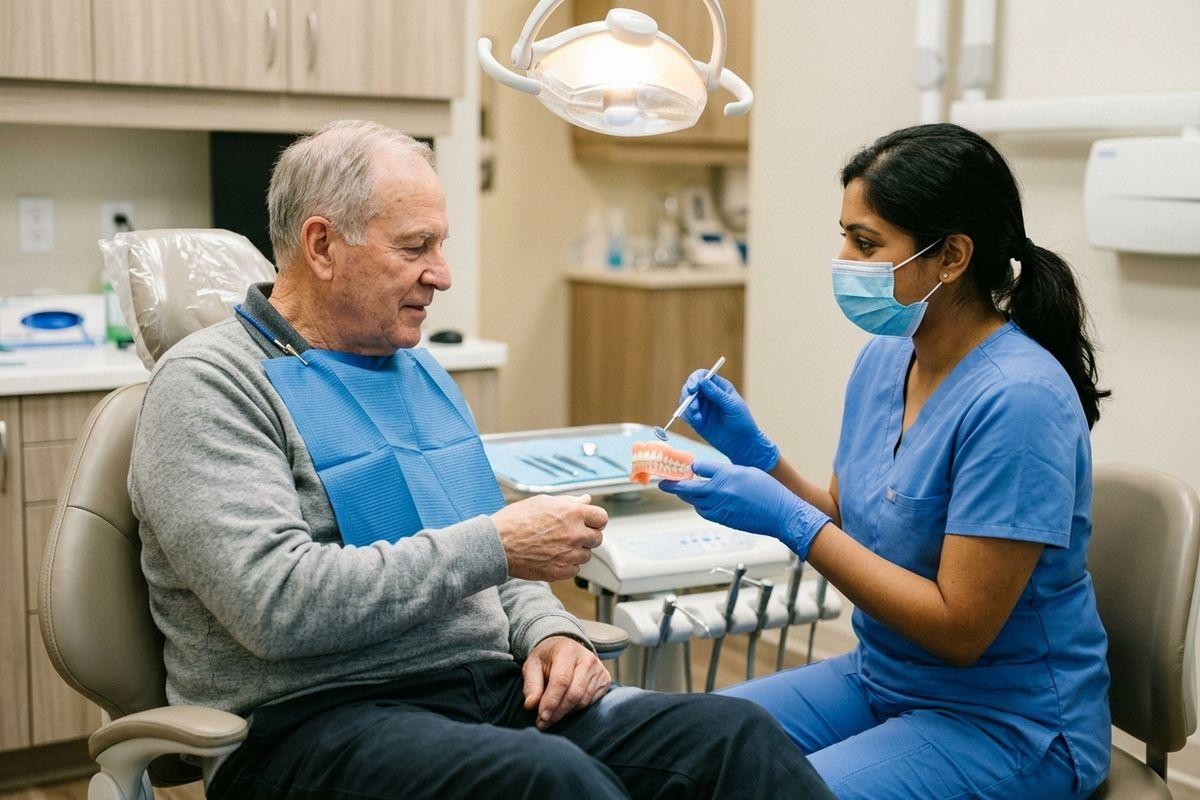
Dentures work a bit differently. They sit on top of your gums, so you can take them out, clean them, and pop them back in.
How They Compare for Daily Life
Eating & Chewing
Picture biting into a crisp apple or chewing a steak at dinner. Once healed, implants give you a firm grip, so most foods are still on the menu. Dentures shift a bit more, so sticky and hard snacks like caramel or raw carrots can be harder to eat.
Comfort & Speech
Implants feel steady because they’re anchored by the jawbone.
Dentures can feel bulky at first, and they sometimes slip while you speak. Many people adjust with practice, though it takes a little time to get used to the feel.
Cleaning & Upkeep
Caring for implants looks a lot like caring for natural teeth. You brush twice a day, floss, and can use a water flosser to reach hard-to-get places. Dentures need a different routine. You remove them at night, soak them in a cleaning solution, and rinse them before putting them back in the morning.
Jawbone Health & Facial Structure
Your jawbone needs consistent stimulation to remain strong, in much the same way as your muscles do. Implants press into the jawbone when you chew, which helps keep it active and strong.
Traditional dentures rest on the surface of your mouth and do not stimulate the bone underneath in the same way. Over time, the jawbone can gradually change, which may affect the fit of your dentures and the lower shape of your face.
Cost, Longevity & What to Know
Upfront & Long-Term Cost
Dentures usually cost less at the start, which makes them easier on a tight budget. Implants require a higher initial investment, but they often last many years with steady care, so the value can add up over time.
Implant-Supported Dentures Option
You don’t always have to pick one or the other. Implant-supported dentures use implants to hold a denture in place. This mix gives you more stability than a standard denture while staying more affordable than some full-arch fixed implant options.
How to Choose the Right Option
The right choice depends on you, not on a single rule. Bone density and your overall health play a big part in this decision, since a healthy jawbone supports implants well. Your budget and daily habits matter too, especially if you love foods that need a firm bite.
Our team at Ti Dental, located in CF Chinook Centre, can review your needs in a calm, judgment-free setting and walk you through your options. Book a visit with a dentist in SW Calgary today and take the first step toward a smile that fits your life.