


Key Takeaways
- Tartar is hardened plaque that forms when plaque sits on your teeth too long.
- You can spot it as yellow, tan, or brown stains and rough patches near the gum line.
- Home methods like tartar control toothpaste may reduce new buildup or lift surface stains, but they can’t remove hardened tartar.
- A dental hygienist uses scaling instruments to remove tartar safely above and, when needed, below the gum line.
- Daily brushing, flossing, and regular dental visits help keep tartar from building up.
Why Tartar Has to Be Professionally Removed
You run your tongue across your teeth and feel a rough, crusty spot near your gum line. This is likely tartar, and our team at Ti Dental can help you deal with it. Tartar is hardened plaque that builds up along your teeth and gum line. Once tartar develops, only a dental professional can remove it safely.
What Tartar Is & Why It Forms
Plaque is a sticky film that forms on your teeth every day. When you skip brushing or let plaque sit too long, it hardens into tartar. Sugary foods and dry mouth can speed this process up, giving plaque more chances to develop and harden before you’re able to clean it away.
Tartar matters for more than appearance. Its rough surface gives bacteria a place to collect along the gum line, which can lead to gum disease and, left unchecked, tooth loss.
How to Spot Tartar on Your Teeth
Tartar often shows up in areas that your toothbrush struggles to reach, like the back of your lower front teeth or along the gum line. Here are some signs to watch for.
- Yellow, tan, or brown stains on your teeth
- Rough or crusty patches near the gum line
- Bad breath that sticks around
- Gums that feel sensitive or look irritated
These signs can point to buildup, but they can also have other causes. A dental exam is the only way to confirm whether tartar is present and how much has formed. If you’ve noticed a few of them, it’s worth booking your next dental visit.
What Home Methods Can & Can’t Do
Once plaque hardens into tartar, no home method will remove it. Tartar bonds to the tooth surface and needs professional instruments to come off safely. Trying to scrape it away yourself with a sharp tool can scratch your enamel and injure your gums.
What home care can do is slow new buildup and keep your teeth cleaner between visits. Here’s what actually helps, and what doesn’t.
Tartar Control Toothpaste & Baking Soda
Tartar control toothpastes contain ingredients like pyrophosphates or zinc citrate that make it harder for fresh plaque to mineralize into tartar. Toothpaste with baking soda works differently, it’s a mild abrasive that can help lift surface stains and neutralize the acids plaque produces. Neither removes tartar that has already hardened.
Brush gently with small circles. Scrubbing hard won’t clear tartar and can wear down your enamel, the protective outer layer of your teeth.
Rinses & Trending Remedies
A warm saltwater rinse can soothe gums that feel tender or irritated, which is why it’s often suggested after a dental procedure. It won’t remove plaque or tartar, though, and it isn’t a substitute for brushing and flossing.
Avoid vinegar rinses. Vinegar is acidic enough to soften and erode tooth enamel, and enamel doesn’t grow back.
You may also have come across oil pulling, which involves swishing a spoonful of coconut oil around your mouth. It’s popular online, but there’s no reliable evidence that it removes plaque or tartar, and dental associations don’t recommend it in place of brushing, flossing, and professional cleanings.
How Your Dental Team Removes Tartar Safely
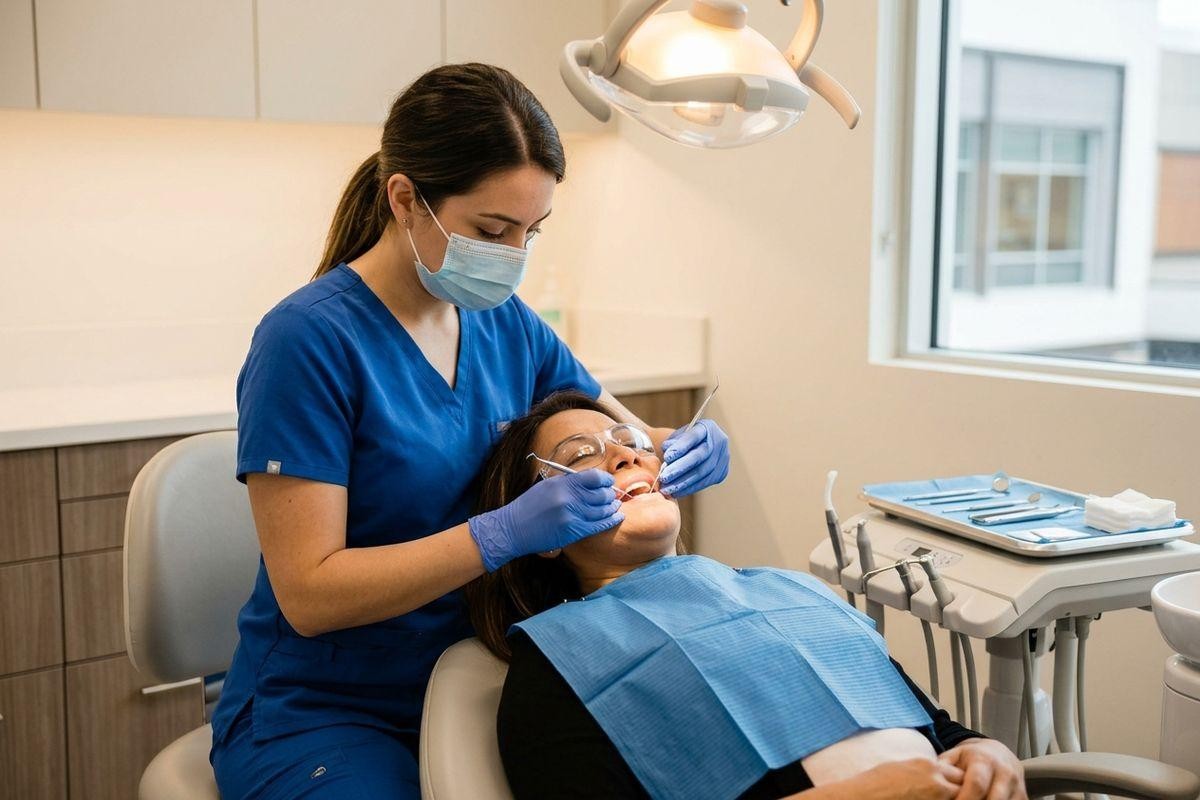
Your dental hygienist uses small instruments called scalers to clear tartar from your teeth, working above the gum line and just below it. If you have heavier buildup deeper below the gum line, they may recommend a deeper cleaning appointment, sometimes called root planing, which is usually done with freezing to keep you comfortable.
After the tartar is gone, your hygienist polishes your teeth to remove surface stains, leaving them feeling smooth and clean.
How to Prevent Further Tartar Buildup
Once your teeth are clean, a few habits keep tartar from coming back: brush twice a day and floss daily to clear plaque before it hardens, limit sugary and starchy foods that feed plaque, and keep up with regular cleanings with your dentist in SW Calgary at the schedule your dental team recommends.
For a closer look at daily routines, diet, and the products that help, read our guide on how to prevent plaque formation.
If you’re ready for a fresh, smooth smile, our team at Ti Dental can help you clear away tartar and build habits that keep your teeth healthy. Request an appointment today at our SW Calgary clinic in the Chinook Centre Professional Tower, with free parking at Chinook Mall and a short walk from Chinook CTrain Station.